
The complete guide
Choosing a Manual Coffee Grinder for Your Daily Brew
A fresh grind without a powered grinder
Buying whole beans adds one more decision to your coffee routine. You need a way to grind them that fits your brew method, your space and the amount of effort you want to spend each morning. A large powered grinder is not the only option.
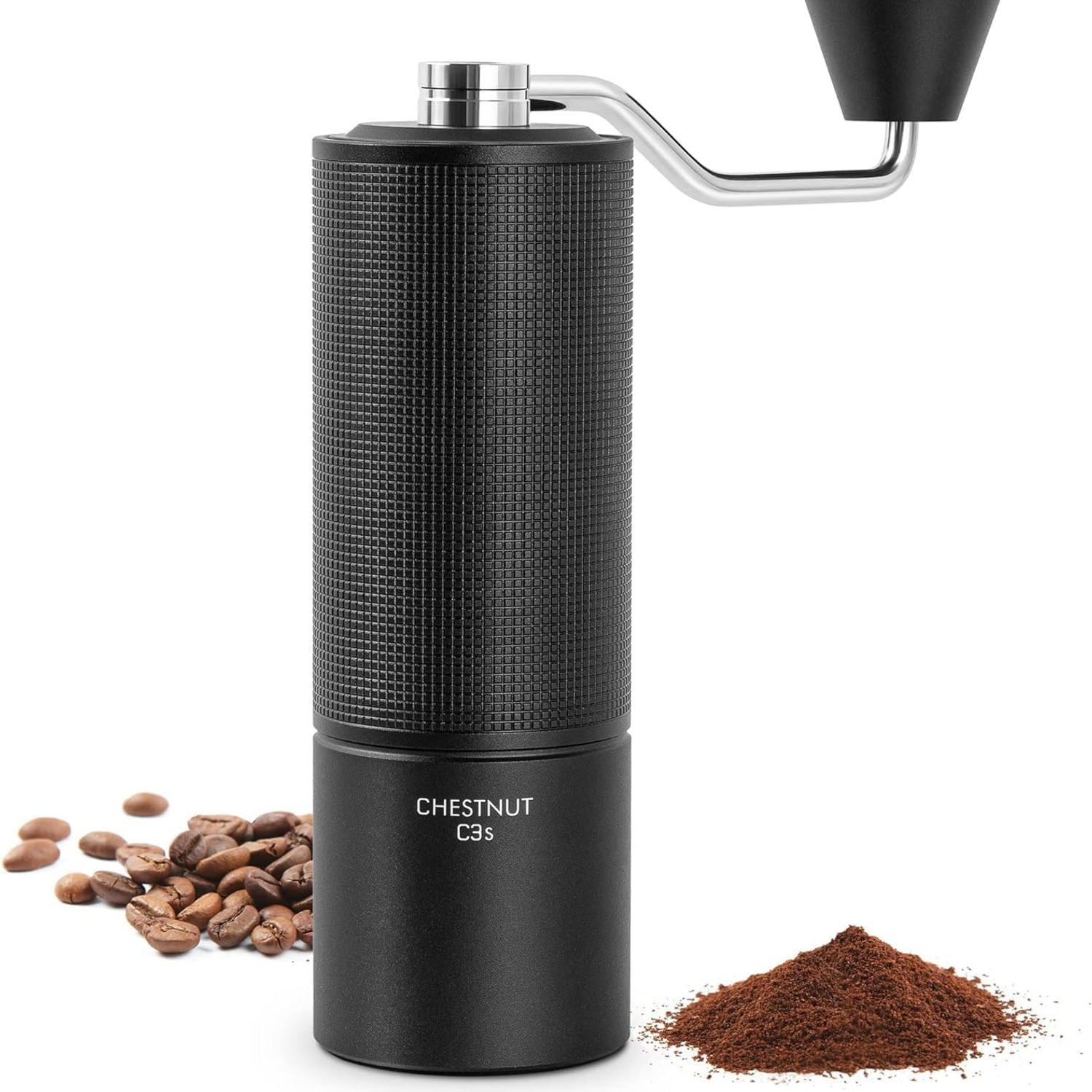
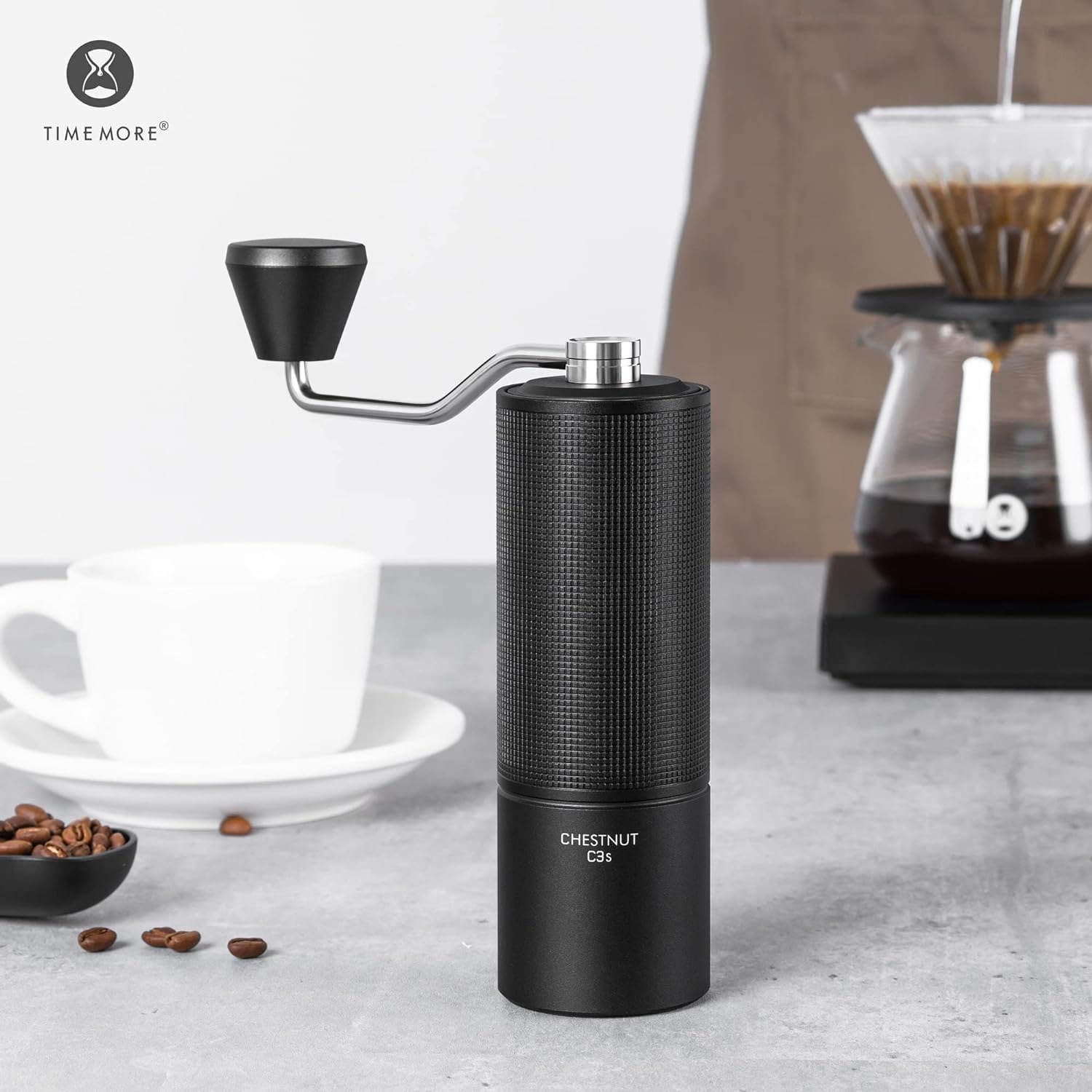
This manual hand coffee grinder gives you a hand-powered approach with a 25 g capacity. It has a steel conical burr and stepless grind adjustment, with espresso, pour over and French press listed as intended uses.
The main question is whether small-batch hand grinding suits your day. Think about your usual dose, how many people you brew for and whether you enjoy doing some of the work yourself. Those details matter more than a long list of features.
How the burr does the work
A hand crank coffee grinder uses your turning motion to drive its grinding mechanism. Beans pass through the burr as you turn the handle, becoming grounds for brewing.
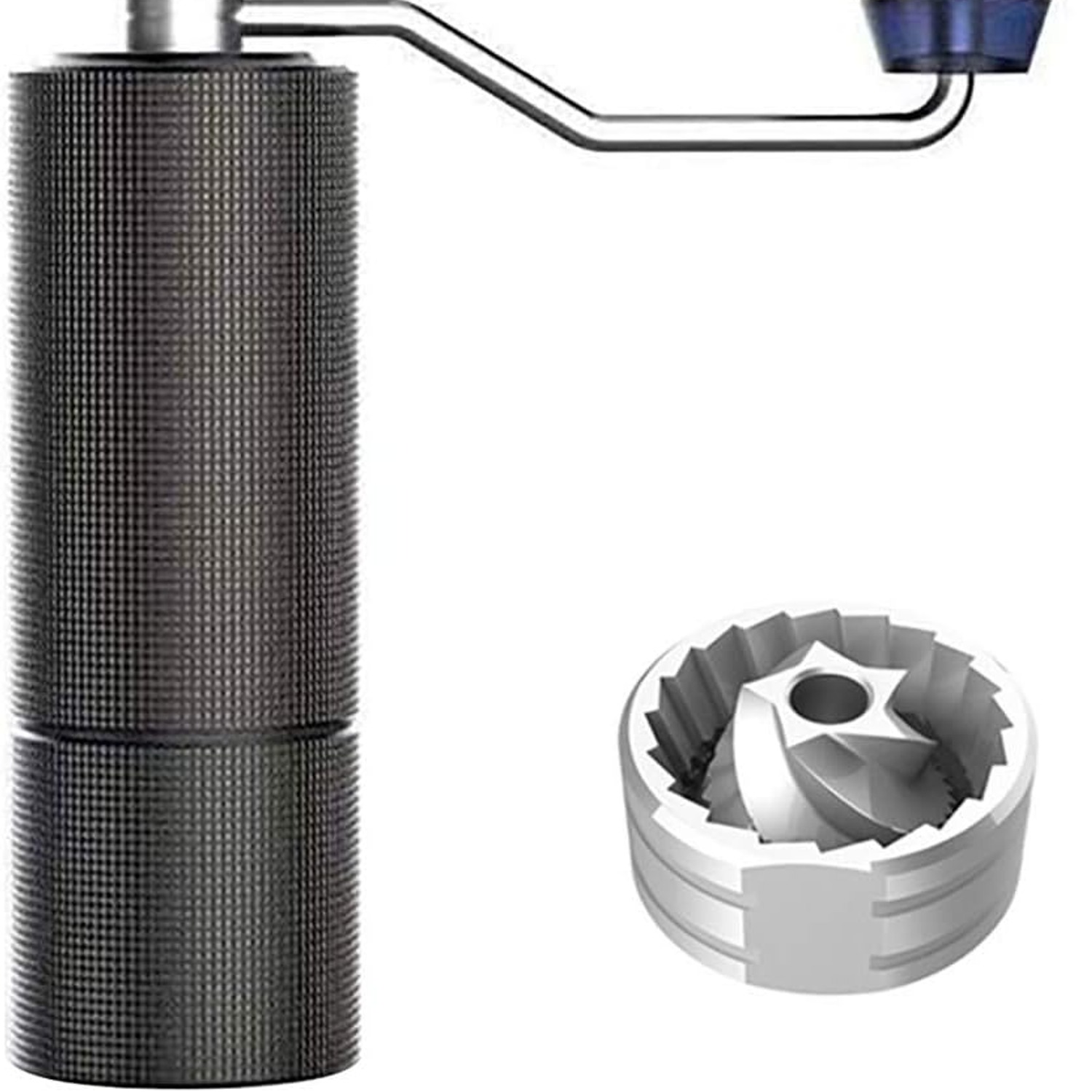
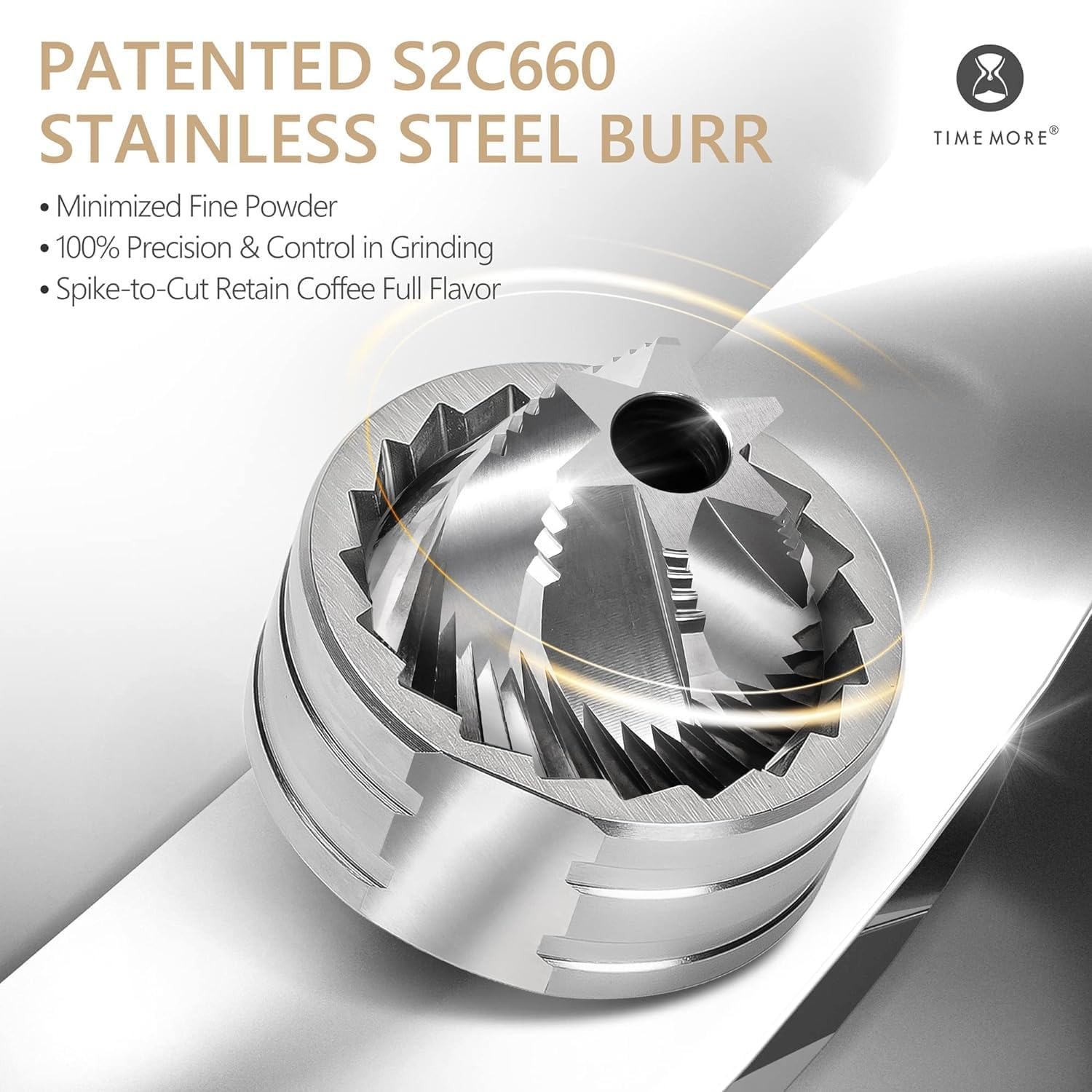
This model uses an S2C stainless steel conical burr. The maker also describes a dual-bearing design, intended to help support stable grinding. These features aim to produce a consistent grind, though the maker does not include measured grind tests.
Why does consistency matter? Coffee particles of very different sizes can extract at different rates during brewing. Grind quality is one part of the result, alongside your beans, water, dose and brewing technique.
A steel burr coffee grinder does not remove the need to experiment. It gives you a tool for adjusting one important part of the recipe.
What stepless adjustment means
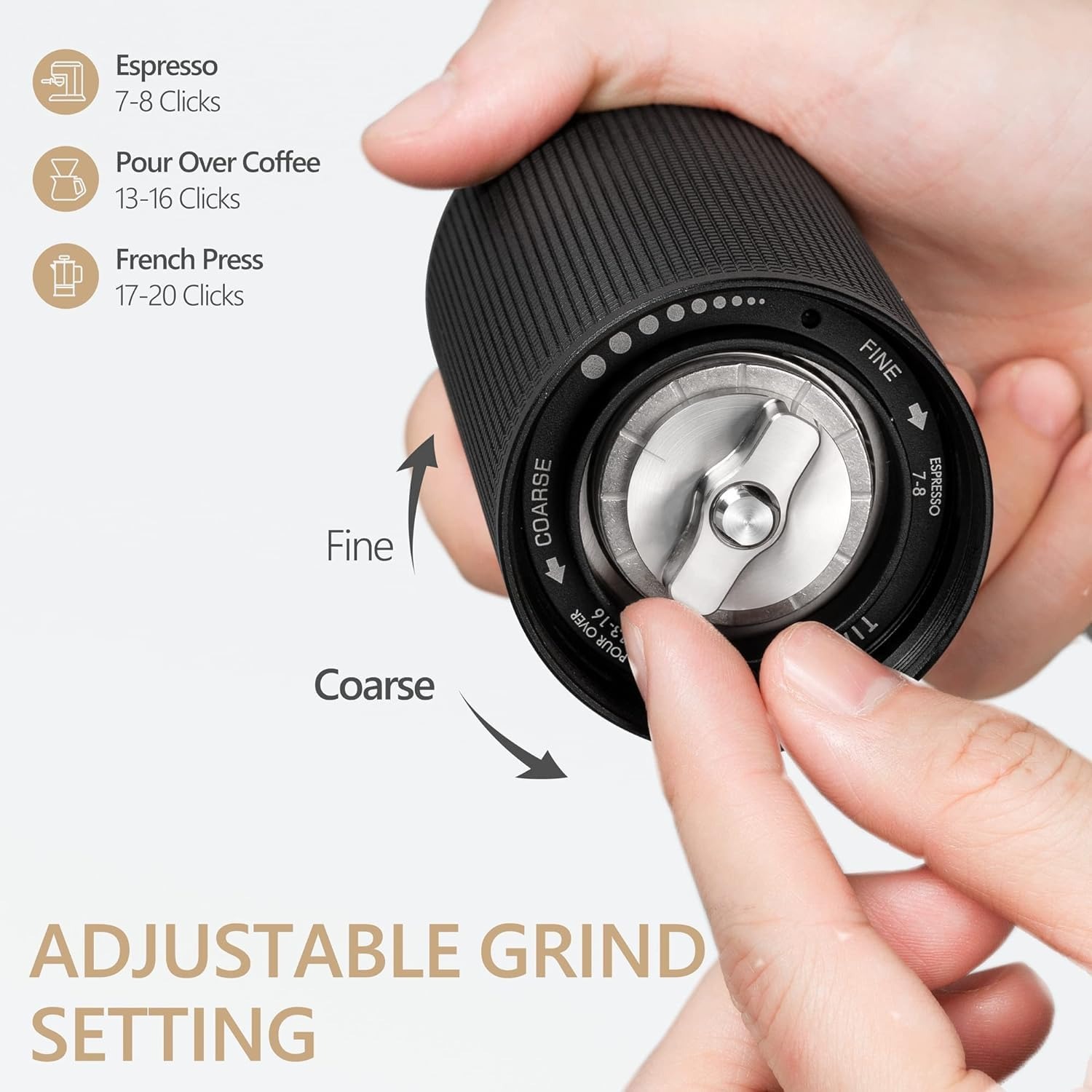
With stepless adjustment, you are not limited to a set of fixed clicks. You can change the grind position to make smaller changes in coarseness.
That can be useful when a coffee tastes close to what you want but needs a slight correction. It also lets you change your approach when moving between brewing methods.
The maker does not state the adjustment range, how the control is marked or where to begin for each brewer. Follow any instructions supplied with the grinder rather than borrowing click counts from another model.
When you find a setting you like, make a note of how you reached it. A stepless coffee grinder can reward a repeatable routine, especially if you switch between two brewers during the week.
Match the capacity to your recipe
The 25 g capacity is one of the clearest facts to use when choosing this grinder. Compare it with the weight of beans in your usual recipe.
If your recipe fits within that limit, you can prepare the dose in one batch. If it calls for more, you will need separate grinding cycles. That is possible, but it adds handling and time.
Avoid choosing by cup count alone. A small, strong drink and a large filter coffee can use different doses. Two people may also mean very different things when they say they want a cup.
A 25 g coffee grinder makes the most sense when its capacity matches how you already brew. If you often make coffee for several people, consider whether repeated batches would become a chore.
Choosing for pour over or French press
The maker lists both pour over and French press among this grinder's intended uses. These methods give you room to test grind changes and see how they affect the cup.
For pour over, start with the recipe recommended for your brewer. Keep the dose and water amount steady while changing the grind, so you can better judge the effect. Changing everything at once makes results harder to understand.
For French press, follow your usual recipe and adjust from there. The maker's description does not supply a dedicated setting chart, so there is no confirmed position to recommend.
When choosing a pour over coffee grinder or French press coffee grinder, look beyond the method name. Capacity, adjustment and your willingness to grind by hand all affect how well it fits daily use.
What to consider for espresso
Espresso is also a listed use, but that should not be read as a promise of a perfect match for every machine. The maker's description has no machine-specific tests, measured grind range or recommended starting settings.
A manual espresso grinder asks for patience while you find a suitable setting. Your coffee, basket, dose and brewing setup all play a part in the result.
If espresso is your only reason for buying, ask for more detail about the adjustment and intended machine compatibility before ordering. That is especially useful if you have a particular basket or workflow in mind.
Stepless adjustment offers a way to make fine changes. It does not, by itself, confirm how quickly or easily a given espresso recipe will come together.
Who will enjoy hand grinding?
This grinder may appeal to someone who makes a small amount of coffee and likes a hands-on routine. It can also suit a setup where access to an electrical socket is limited.
Manual operation has a clear trade-off. You provide the effort, and every batch takes repeated turning. Grinding speed is not specified, so do not choose it on the assumption that it will be quick.
Consider your hands and wrists as well. You need to hold the grinder steady while turning the handle. If gripping or repeated motion is uncomfortable, a powered option may be a more practical choice.
There is no single best choice for everyone. The useful choice is the one you will be comfortable using when you are tired, busy or making your first coffee of the day.
Build, weight and portability
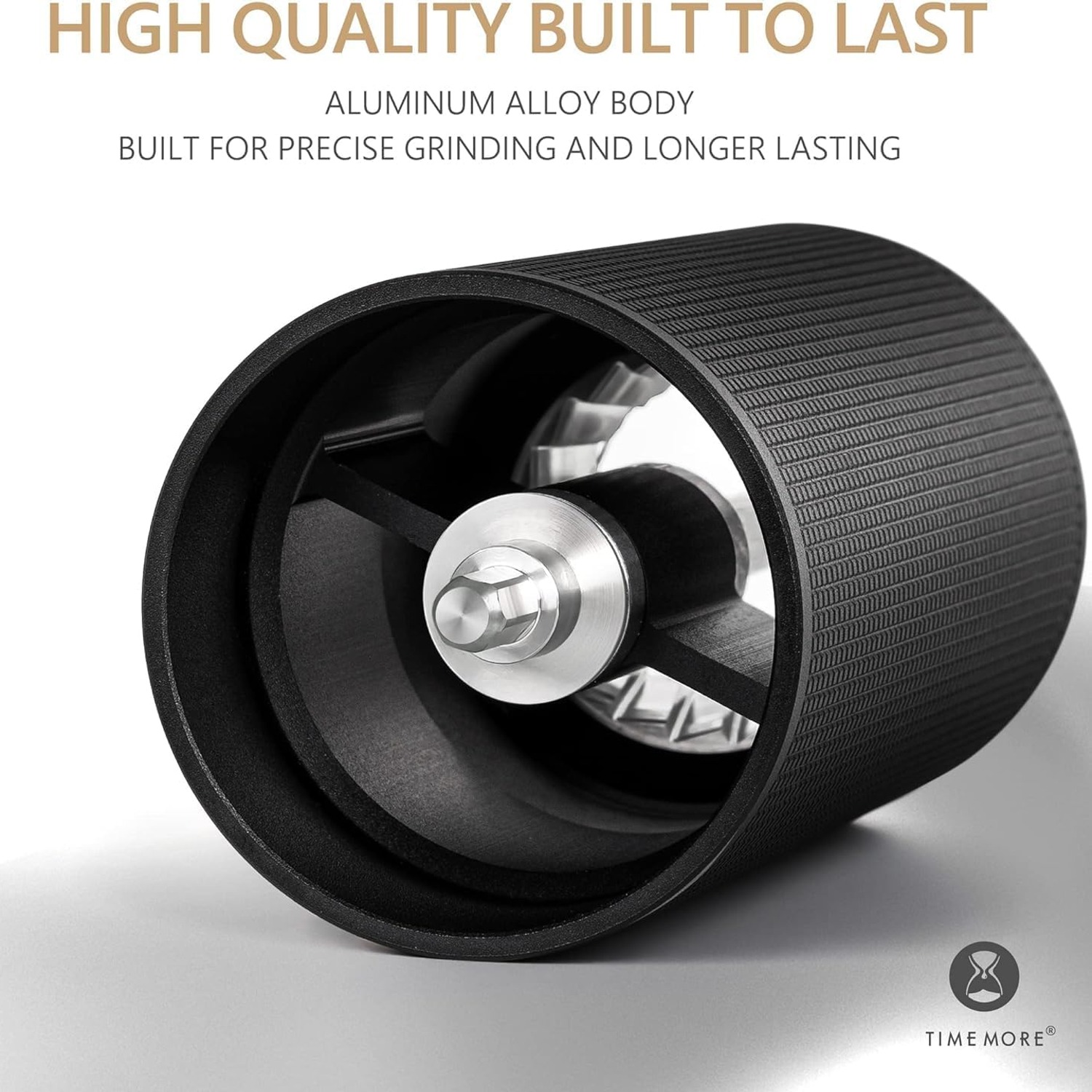
The maker describes a black aluminium alloy body with an all-metal build and no plastic parts inside. The listed weight is 530 g.
That weight is worth considering if you want a portable coffee grinder. Manual operation means you do not need a power supply for grinding, but it does not make the item weightless in a bag.
For a car trip or holiday kitchen, 530 g may be easy to allow for. For a tightly packed walking kit, every item needs more thought. Compare it with the rest of your coffee equipment rather than considering the grinder alone.
Full dimensions are not specified by the maker. If it needs to fit a drawer, case or narrow shelf, confirm the measurements before you buy. Weight alone cannot tell you whether it will fit.
A simple way to get started
Begin with a familiar coffee recipe rather than a completely new brewing method. That gives you a useful point of comparison as you learn the grinder.
Measure a dose within the 25 g capacity. Set up the grinder according to its supplied instructions, then grind and brew. Note the dose and any adjustment details you can repeat.
Taste the coffee before deciding what to change. Keep your changes small and alter one part of the recipe at a time. You do not need to chase a perfect cup on the first attempt.
Do not force an adjustment or a part that resists movement. The maker does not include operating or disassembly steps, so the supplied instructions should guide the exact handling.
Care without water
The care advice for this aluminium coffee grinder is clear on one point. Do not wash it with water.
Use a dry brush to remove loose grounds. Pay attention to areas you can reach safely, and follow the supplied guide before removing any parts. Do not assume that a removable-looking section is meant to be taken apart.
A short clean after use helps keep loose coffee from sitting in the grinder. Store it dry and avoid leaving it where water from the sink or brewing area can splash onto it.
The maker's text mentions a complimentary brush, but another field does not clearly confirm the accessories. If having a brush in the box matters to you, check before ordering.
Check the unknowns before buying
The useful confirmed details are the 25 g capacity, 530 g weight, steel conical burr and stepless adjustment. The maker's description also identifies the part number as TGD001.
Other details remain unknown. There is no stated brand, country of origin, full set of dimensions or warranty term.
Read our delivery and returns information before paying. If you are buying a gift, allow time to confirm arrival expectations and check the recipient's brewing setup.
Asking a focused question now is easier than discovering a mismatch later. Capacity and manual effort are good starting points, followed by fit, accessories and care.
The short version
Choose this manual burr grinder if a 25 g batch size and hand-powered routine match the way you make coffee. Its steel conical burr, dual-bearing design and stepless adjustment are the main features to weigh up.
Take a closer look before buying if you need exact dimensions, confirmed accessories or detailed espresso compatibility. Plan for dry-brush care, and remember that larger recipes will need more than one batch.
A suitable grinder should make sense in your real routine, not just on a feature list. Start with how much coffee you brew and how you like to prepare it.