

The complete guide
Choosing a 600ml Milk Frothing Pitcher for Your Coffee Routine
A good coffee routine can come unstuck at the milk stage. Too much milk leaves little room for foam. An awkward vessel makes pouring harder, and guessing the amount each morning makes it difficult to repeat a drink you liked.
A dedicated milk frothing jug gives that part of the process its own place. This 600ml model combines internal measurement lines with an ergonomic handle and a shaped pouring spout. It is a straightforward accessory for people who already have a way to heat or froth milk.
The main buying question is not whether 600ml sounds generous. It is whether the jug fits your machine, your usual drink and the way you like to pour. Here is what to consider before adding it to your coffee station.
What this pitcher does, and what it does not
This stainless steel milk frothing pitcher holds milk during preparation and lets you pour it into a cup. With suitable separate equipment, it can be used when making lattes, cappuccinos and other milk-based drinks.
It does not heat or froth milk on its own. There is no motor, whisk or heating element listed. If you are starting from scratch, buying the pitcher alone will not give you the same setup as a milk frothing appliance.
Think of it as the vessel you work with, rather than the machine that does the work. The handle helps you guide it, the markings help you measure, and the spout helps direct the flow. Your equipment and technique still shape the finished milk.
That distinction matters when comparing coffee station accessories. A simple jug may be exactly what you need if your espresso machine already has a steam wand. Someone without one may need a different tool alongside it.
Understanding the 600ml capacity
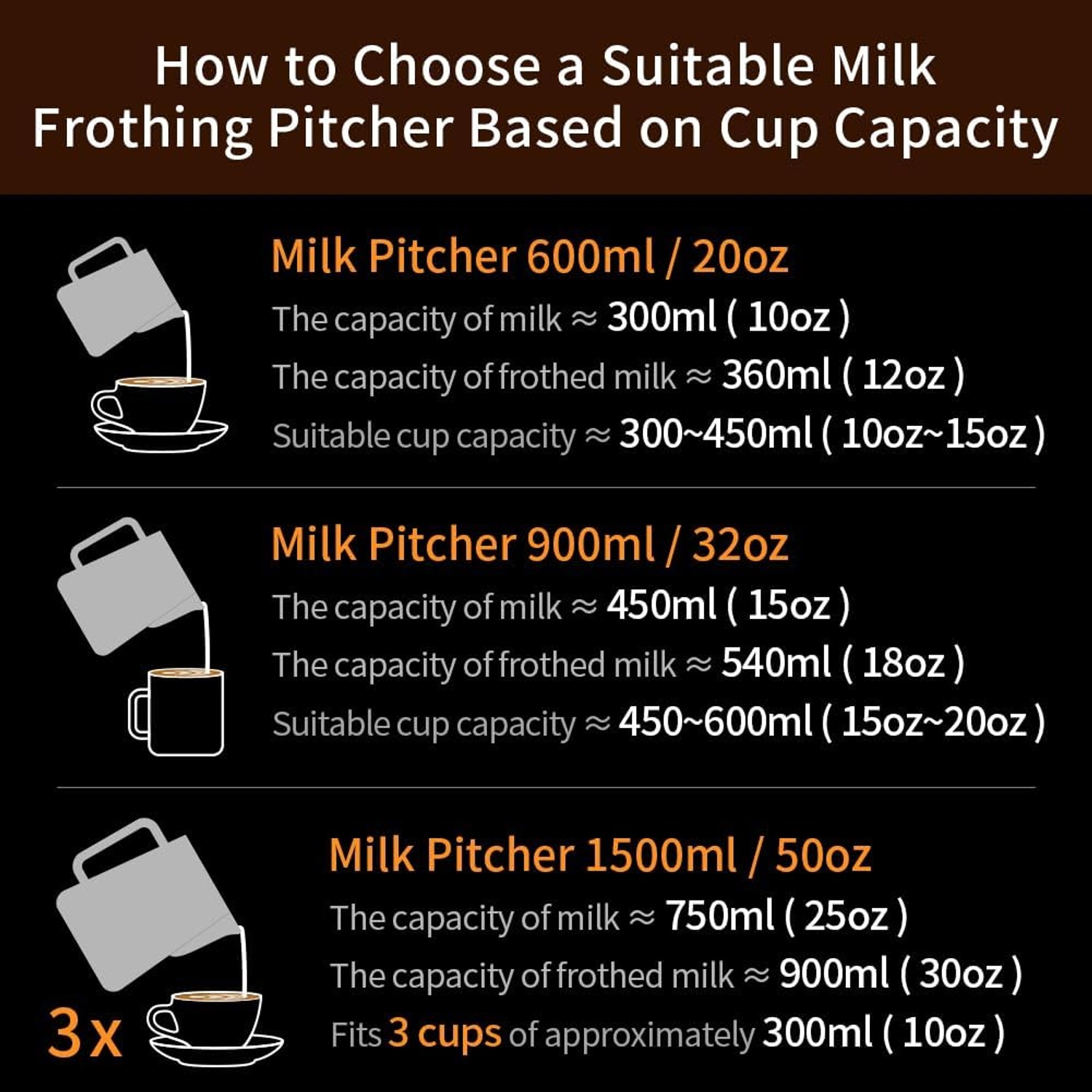
The stated 600ml volume is the maximum capacity. It is not a suggested amount to pour in before frothing.
Milk needs space as foam develops. Filling to the rim leaves no useful room for expansion or movement. It also makes the jug harder to handle without spilling.
The maker gives no exact working fill for this model. Start with guidance from your frothing equipment and the amount your drink needs, while keeping enough empty space above the milk. Do not treat the maximum figure as a recipe.
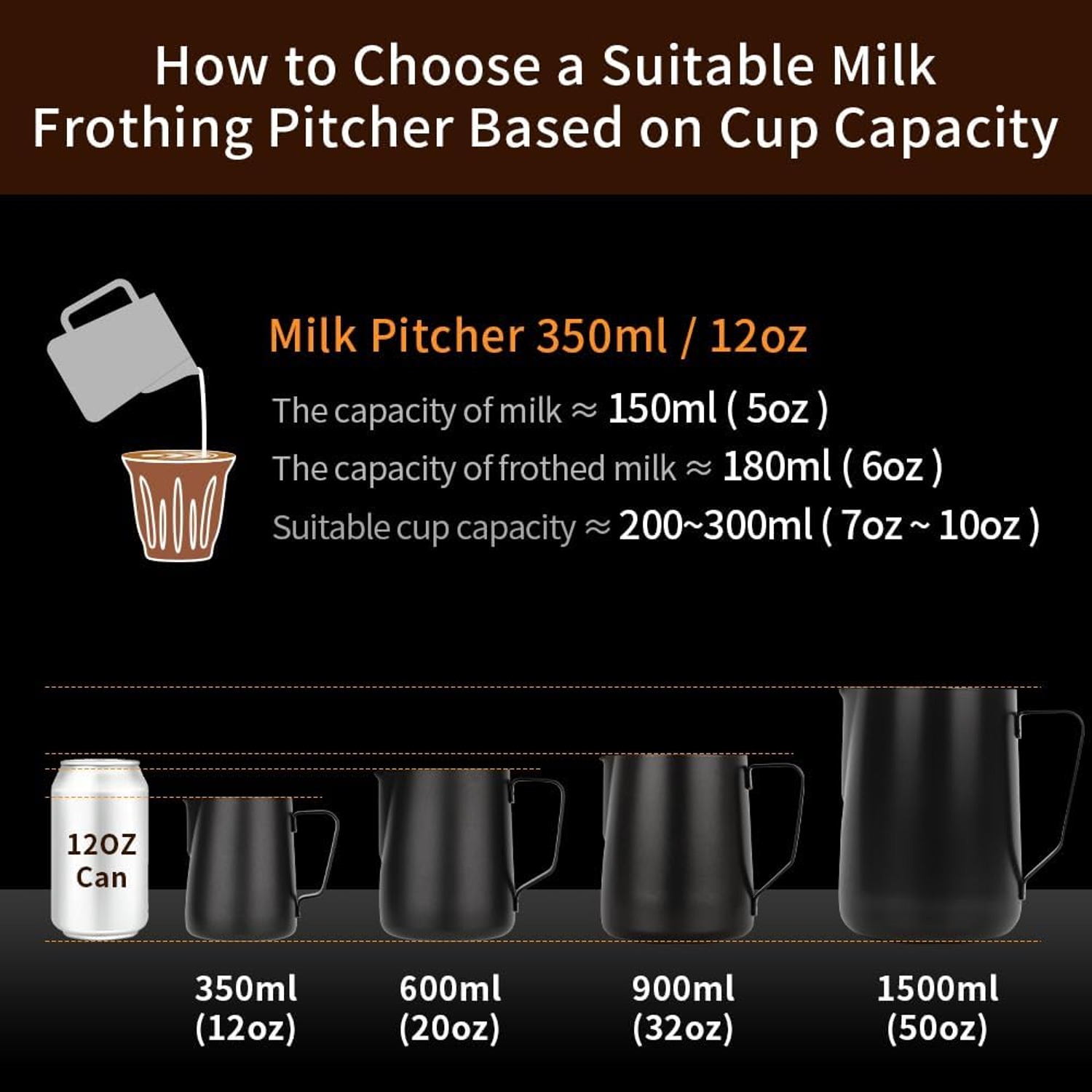
A 600ml milk jug also does not promise a fixed number of servings. A small coffee cup and a large mug need different quantities. Before choosing, think about what you actually make rather than relying on a one-cup or two-cup label.
Why the internal markings help
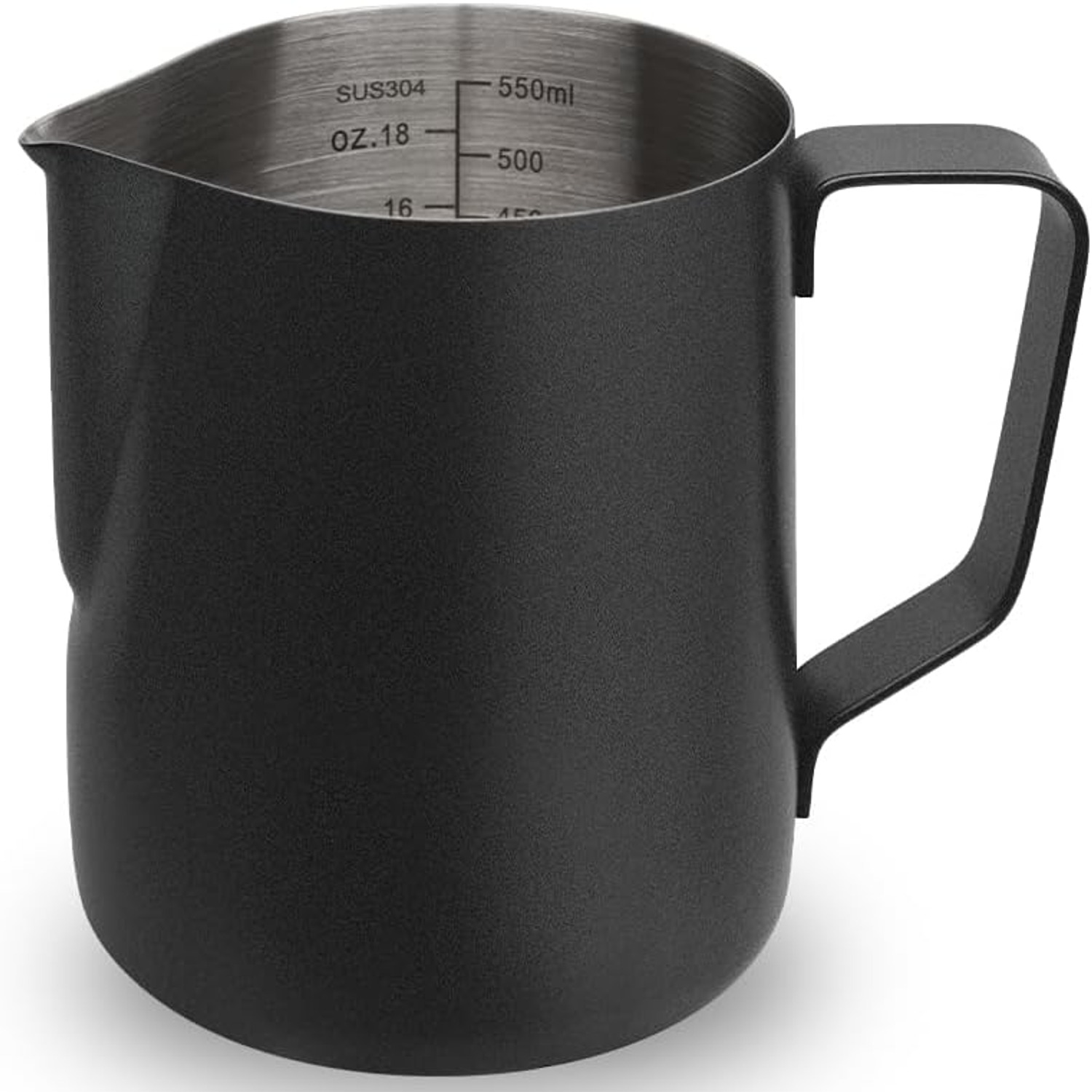
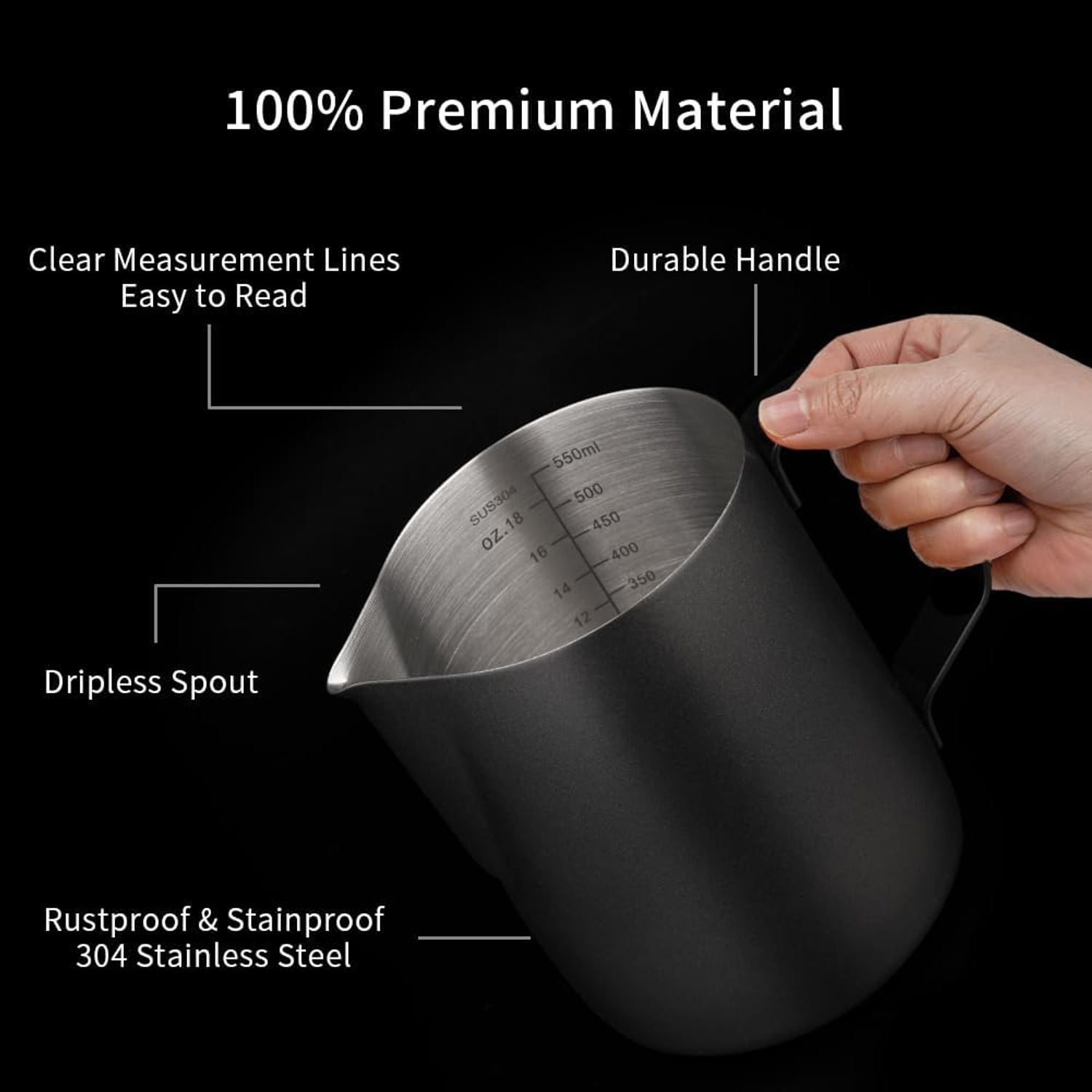
The internal scale is marked in ml and oz. Its most useful role is helping you repeat a starting amount without guessing by eye.
Suppose your usual cup needs less milk than you expected. You can adjust the next fill and use the markings to keep that change consistent. That is more useful than filling to a different level each morning and wondering why the result varies.
The markings do not tell you how much foam you will create. They also do not turn the pitcher into a temperature gauge. They are a reference for liquid quantity.
For a home coffee routine, that reference can make practice easier. Keep the starting amount steady while you work on another part of the process, such as steaming technique or pouring speed.
Check the fit beneath your steam wand
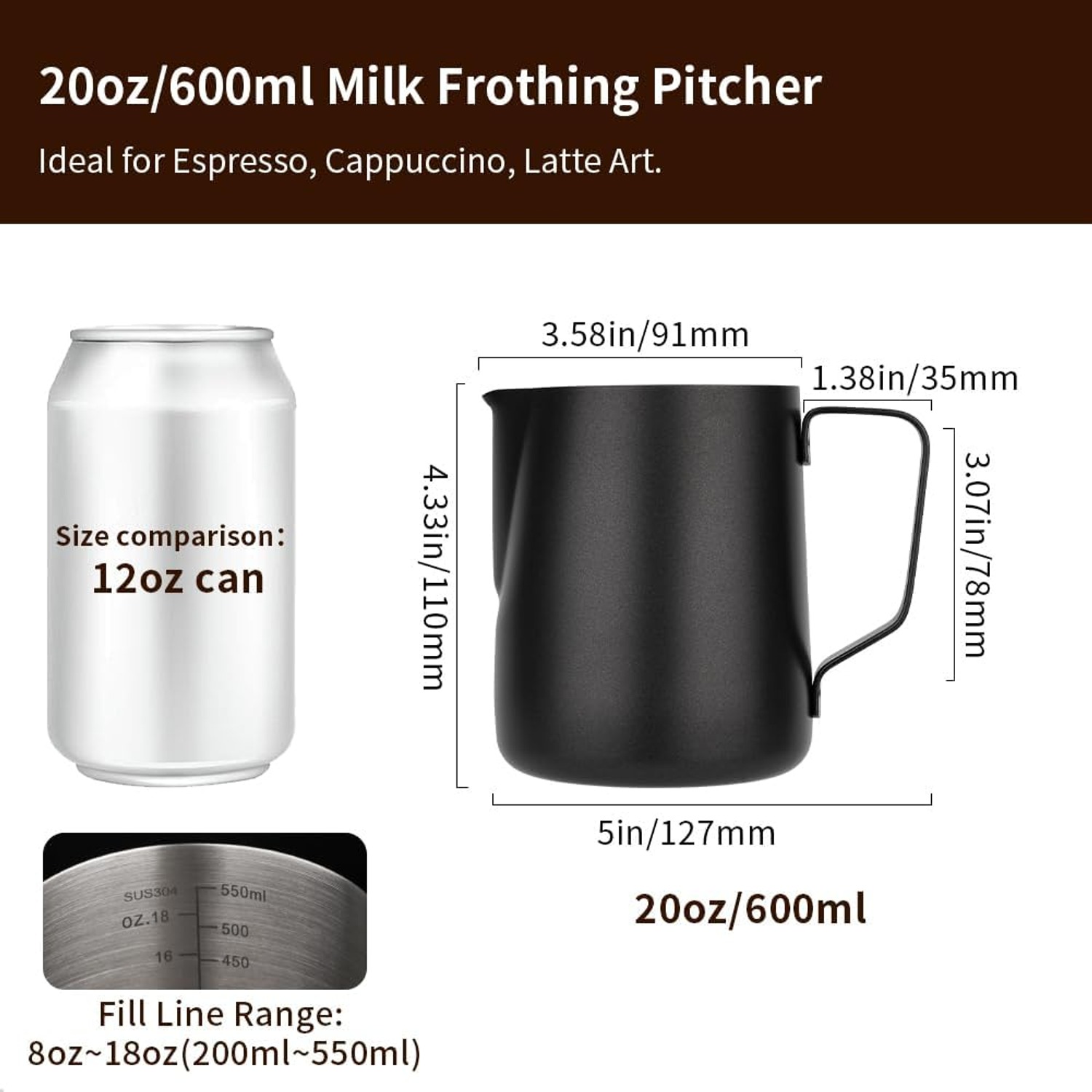
The supplied dimensions are 9 cm wide and 11 cm high. Use those measurements to check the space around your espresso machine before ordering.
Height alone is not the whole fit test. You need room to place the jug beneath the wand, move it into a working position and remove it without catching the rim. Consider the angle you use when steaming as well.
The handle also needs space for your hand. A tight corner beside a machine or wall can make an otherwise suitable jug awkward to use.
No machine compatibility list is provided. If clearance is close, measure your setup rather than assuming that every milk steaming pitcher will fit. A quick check now can prevent a frustrating mismatch later.
Handle, spout and pouring control
This model has an ergonomic handle and a spout intended for controlled pouring. Those are useful features when you want to guide milk into a cup rather than tip it from a broad container.
The handle gives you a grip point while you adjust the jug's angle. The spout directs the stream. Together, they support the movements used in latte art practice.
They do not guarantee a pattern or remove every drip. Milk texture, cup position and pouring speed all play a part. A latte art pouring jug is one part of the process, not a shortcut around learning it.
If you are new to pouring, focus first on making a repeatable drink. Keep the cup steady, work carefully and change one part of your method at a time. Consistency is a more useful early goal than a complicated design.
Who this jug may suit
This pitcher may suit a home coffee maker who wants a separate vessel for milk preparation. It is also described by the maker for professional baristas, though the right choice still depends on personal working habits.
For a beginner, the measurements offer a clear reference while the handle and spout provide a way to practise pouring. You do not need to be making patterns to benefit from measuring milk more carefully.
For an experienced user, the key questions may be size and feel. Check the dimensions and listed empty weight of 0.24 kg against what you already prefer. Remember that the working weight increases once milk is added.
It can also serve as a hot chocolate milk jug. If that is your main use, think about how you will heat or froth the milk and how quickly you can clean away residue afterwards.
Materials and finish
The maker details describe stainless steel construction, a black coating and a polished interior. The shape is round, with a modern style.
The black finish may appeal if you want your coffee tools to share a similar look. It is still worth choosing by function first. A colour match will not solve a clearance issue or make the capacity right for your drinks.
The structured attributes do not provide a country of origin, and no warranty is stated in the maker's description. Avoid reading extra promises into the material description.
Likewise, stainless steel construction does not mean every heating method is approved. Direct hob use is not specified, and a metal pitcher should not go in a microwave. Use it with appropriate separate equipment and follow that equipment's instructions.
Choosing for your usual drinks
Start with your cup. How much milk does your normal drink require, and how much room will the milk need during frothing?
Then consider your workflow. If you make one drink at a time, you may value a repeatable starting fill more than maximum capacity. If you make several drinks, do not assume this pitcher can prepare all their milk in one batch.
For cappuccino, foam is an important part of the drink, so headroom matters. For latte art, the texture and flow of the milk matter alongside the shape of the spout.
Plant-based drinks can behave differently during frothing. No milk-type restriction is given by the maker, but the jug itself cannot make every drink foam in the same way. Follow the preparation guidance for your chosen milk and equipment.
Cleaning without damaging the finish
Rinse the jug soon after use, once it is safe to handle. Dried milk residue takes more effort to remove than fresh residue.
Wash with warm water, mild detergent and a soft cloth or sponge. Give the interior, rim and spout attention, then rinse thoroughly. Dry before putting it away.
Avoid abrasive pads and harsh cleaners on the black coating. Scrubbing harder is not a good substitute for cleaning promptly.
Dishwasher suitability is not stated by the maker. Hand washing is the cautious option unless confirmed care instructions say otherwise. There is also no lid included, so treat this as a preparation tool rather than a sealed container for storing milk.
A few checks before ordering
Confirm that you want a manual pitcher, not an electric frother. Check the 11 cm height against your steam wand clearance and make sure there is room for your hand.
Look at the capacity as a maximum, with a lower working fill needed for frothing. Consider whether the black finish suits your setup and whether gentle hand washing fits your routine.
If you are buying a barista milk pitcher as a gift, ask what the recipient already uses. Preferred size and pouring feel can be personal. Someone who already owns a favourite jug may have more specific needs than a new coffee hobbyist.
Delivery timing, warranty terms and returns conditions are not given by the maker. Read our delivery and returns pages information before ordering, especially if the purchase is for a particular date.
The short version
This black 600ml pitcher offers internal ml and oz markings, an ergonomic handle and a pouring spout in a stainless steel body. It is a practical option to consider when you already have suitable milk heating or frothing equipment.
Choose it for the fit and features you need. Leave headroom when frothing, check your machine clearance and clean it gently after use. The right jug should make your routine easier to repeat, while leaving the coffee making firmly in your hands.